Nintendo Switch 2 vs. Steam Deck OLED: Which Handheld Wins?

We compared both handhelds across 12 rounds — display, performance, battery, game library, docking, and price. Both have gotten more expensive this year, and the winner depends more on what you play than on the specs.

SP
Sam Park
Senior Gaming Editor · Handheld & console reviews
164 comments 5.2k shares

Every handheld generation produces one rivalry that splits the room. In 2026, it's Nintendo against Valve. The Nintendo Switch 2 and the Steam Deck OLED are both big-screen handhelds that dock to a TV, with fast chips and gorgeous displays — but they're built around opposite ideas of what a handheld should be: one is a polished, plug-and-play console built around Nintendo's own games, the other is an open handheld PC that plays your Steam library and a lot more.

Both have also gotten pricier this year. Nintendo raised the Switch 2 from $449.99 to $499.99 on September 1, 2026, and Valve lifted the Steam Deck OLED from $549 to $789 for the 512GB model (and from $649 to $949 for 1TB) on May 27, 2026. That changes the value math a lot, which is why this comparison puts price on the scoreboard right next to the specs.

This isn't a "spec sheet showdown" review. Spec sheets don't tell you which handheld you'll actually enjoy using. What follows is 12 rounds of head-to-head comparison across the categories that matter — design, display, performance, game library, exclusives, battery, docking, software, controls, storage, price, and the one thing that turns out to decide the whole thing. Everything here is built on official specs from Nintendo and Valve and current US list prices. If you're shopping right now, check current offers on our deals page or browse more matchups in our comparison tool.

Nintendo Switch 2

  • Display 7.9" LCD 1080p, 120Hz VRR, HDR10
  • Chip Custom NVIDIA processor
  • Docked output Up to 4K @ 60 fps / 120 fps at 1440p
  • Storage 256 GB UFS + microSD Express
  • Battery 5,220 mAh (2–6.5 hrs)
  • Charging ~3 hours (in sleep mode)
  • Weight 401 g (534 g with Joy-Con 2)
  • Wireless Wi-Fi 6 / Bluetooth
  • Game support Switch 2 + compatible Switch games
  • Starting price $499.99

Valve Steam Deck OLED

  • Display 7.4" HDR OLED 1280x800, 90Hz
  • Chip AMD Zen 2 4C/8T + 8 RDNA 2 CUs
  • Docked output USB-C DisplayPort (dock sold separately)
  • Storage 512 GB / 1 TB NVMe + microSD
  • Battery 50 Whr (3–12 hrs)
  • Charging 45W USB-C charger included
  • Weight 640 g
  • Wireless Wi-Fi 6E / Bluetooth 5.3
  • Game support Steam library via SteamOS + Proton
  • Starting price $789 (512GB) / $949 (1TB)
Round 01

Design & Portability

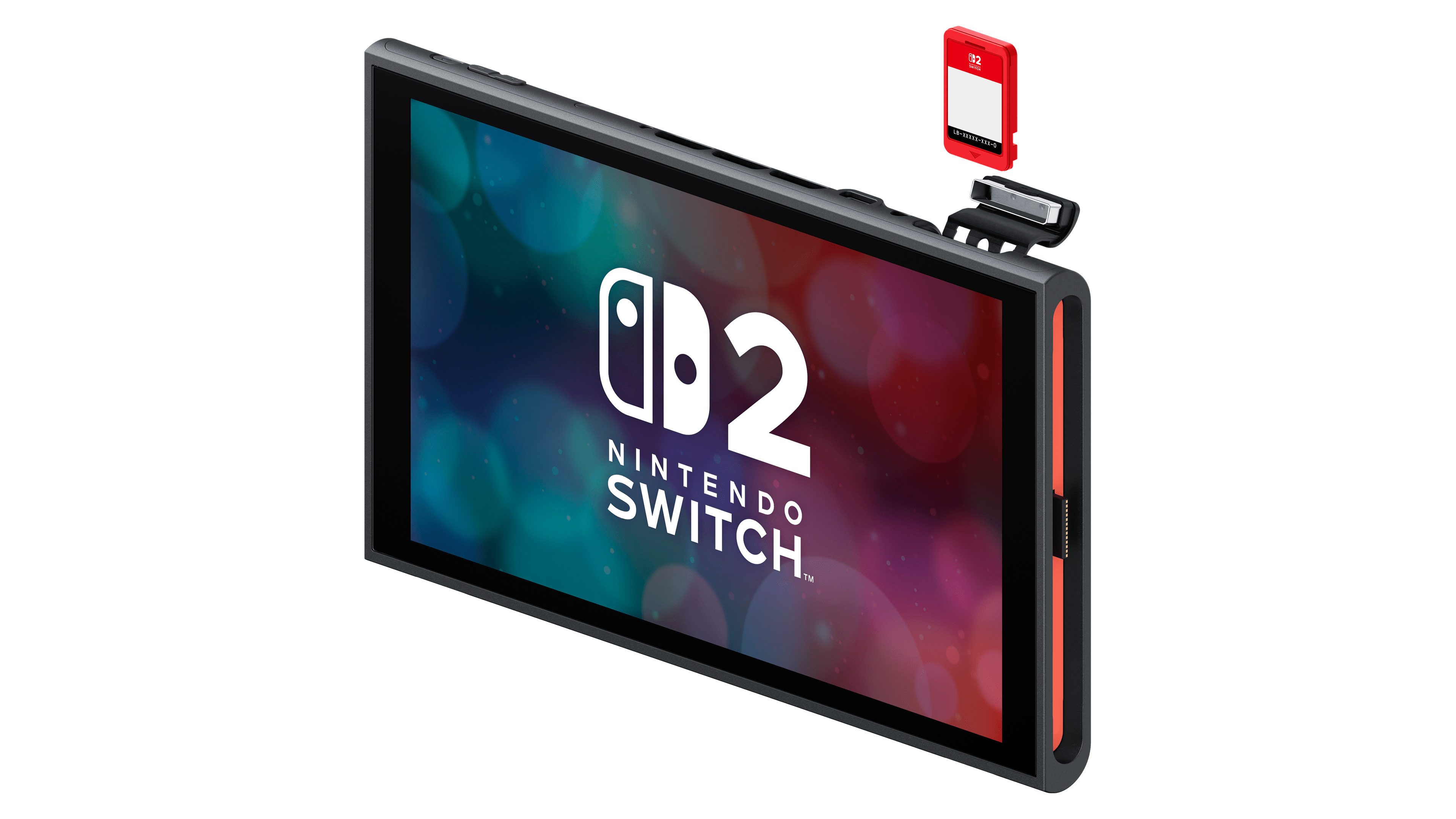
The Switch 2 is the more portable of the two. The console weighs approximately 401 g (about 534 g with Joy-Con 2 controllers attached) and measures roughly 272 × 116 × 13.9 mm. The Joy-Con 2 controllers attach magnetically, detach for two-player play anywhere, and the console adds two USB-C ports and a 3.5mm headphone jack.

The Steam Deck OLED is a different shape of device: a 640 g slab that measures about 298 × 117 × 49 mm, with contoured grips, full-size controls, and a built-in fan. It's bulkier, but it's also more comfortable for long sessions on the couch. Round result: Switch 2, because it's lighter and thinner, and its controllers detach — if you carry your handheld every day, that matters more than grip contouring.

Round 02

Display

This round is genuinely close, because the two screens win in different ways. The Switch 2's 7.9" LCD is larger and sharper at 1920 × 1080, supports HDR10, and has variable refresh rate up to 120 Hz. Nintendo's panel also has a wide color gamut and is a huge step up from the original Switch's 720p screen.

The Steam Deck OLED's 7.4" HDR OLED runs at 1280 × 800 and up to 90 Hz, but OLED means true blacks, excellent contrast, and a peak HDR brightness of 1,000 nits (600 nits in SDR). Games with dark scenes look dramatically better on the Deck; games that need sharpness or fast motion lean toward the Switch 2. Round result: Tie. Choose contrast or resolution.

Round 03

Performance & Chip

The Switch 2 runs a custom processor made by NVIDIA, built for Nintendo's games. In TV mode, it can output up to 4K at 60 fps, and supports up to 120 fps when 1080p or 1440p is selected; handheld output tops out at 1080p. Games are built around this one fixed spec, so they tend to look and run the way their developers intended.

The Steam Deck OLED uses an AMD 6nm APU with a 4-core, 8-thread Zen 2 CPU (2.4–3.5 GHz), 8 RDNA 2 compute units (about 1.6 TFLOPs), 16 GB of LPDDR5 RAM, and a 4–15W power envelope. It's an older design, but because it's a PC, you can tune resolution, frame rate, and power draw per game. Round result: Tie. Switch 2 wins on fixed-spec polish and docked output; the Deck wins on flexibility.

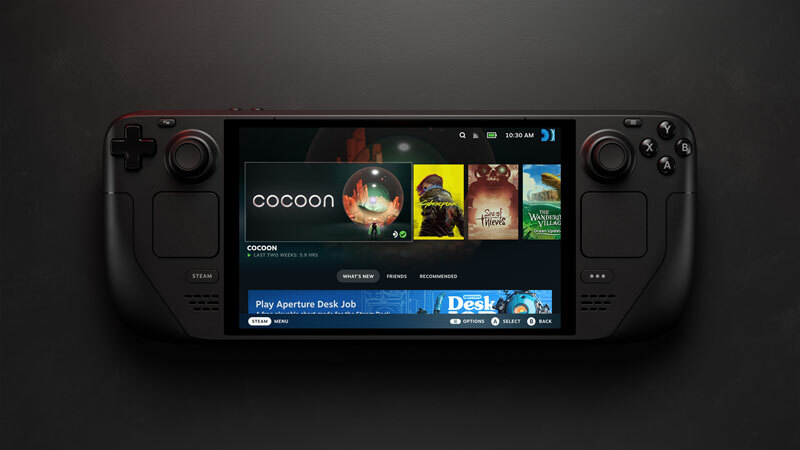
Steam Deck OLED handheld — access to the full Steam game library on a 7.4-inch HDR OLED screen
Game library: the Steam Deck OLED plays your existing Steam library out of the box, with no new purchases required.
Round 04

Game Library

The Steam Deck OLED wins this round on sheer breadth. It runs SteamOS, which uses the Proton compatibility layer to play a huge share of the Windows-based Steam catalog — indie hits, AA gems, older classics, and big recent releases — and it also gives you cloud saves and Steam sales. If you already own games on Steam, they come with you on day one.

The Switch 2 plays Nintendo Switch 2 games and, because both game card types fit the slot, compatible Nintendo Switch games as well. That's a deep, high-quality catalog — but Nintendo's own games tend to hold their prices for years, while Steam discounts constantly. Round result: Steam Deck OLED on breadth and long-term value. Browse more on our Electronics category page.

Round 05

Exclusives & Ecosystem

If you want Nintendo's own games, the decision is already made. Titles like Mario Kart World and Donkey Kong Bananza exist only on Nintendo hardware, and the Switch 2 adds features such as GameChat, GameShare, and Joy-Con 2's mouse mode that the Deck simply doesn't have. Nintendo's local multiplayer is also unmatched: two people can play right out of the box.

Valve's ecosystem is broader but less exclusive: Steam Remote Play, cloud saves, a giant community, and the ability to continue a game from your desktop. It's an excellent ecosystem — it just doesn't have anything you can't also get on a PC. Round result: Switch 2, because Nintendo's exclusives are the one thing money can't buy anywhere else.

Round 06

Battery Life

The Steam Deck OLED wins the battery round on paper and on capacity. Valve rates its 50Whr battery at 3–12 hours of gameplay depending on the game, and says it delivers 30–50% more battery life than the original LCD Steam Deck. Nintendo lists the Switch 2's 5,220 mAh battery at roughly 2–6.5 hours, also depending on the game, which is a smaller range and a lower ceiling.

Both ranges are estimates — a demanding game on either device lands near the low end, and a light indie game lands near the top. Charging is simpler on the Deck, which ships with a 45W USB-C charger, while the Switch 2 takes approximately 3 hours to charge in sleep mode. The Joy-Con 2 controllers add roughly 20 hours of battery of their own. If you play away from an outlet, the Deck wins this round clearly.

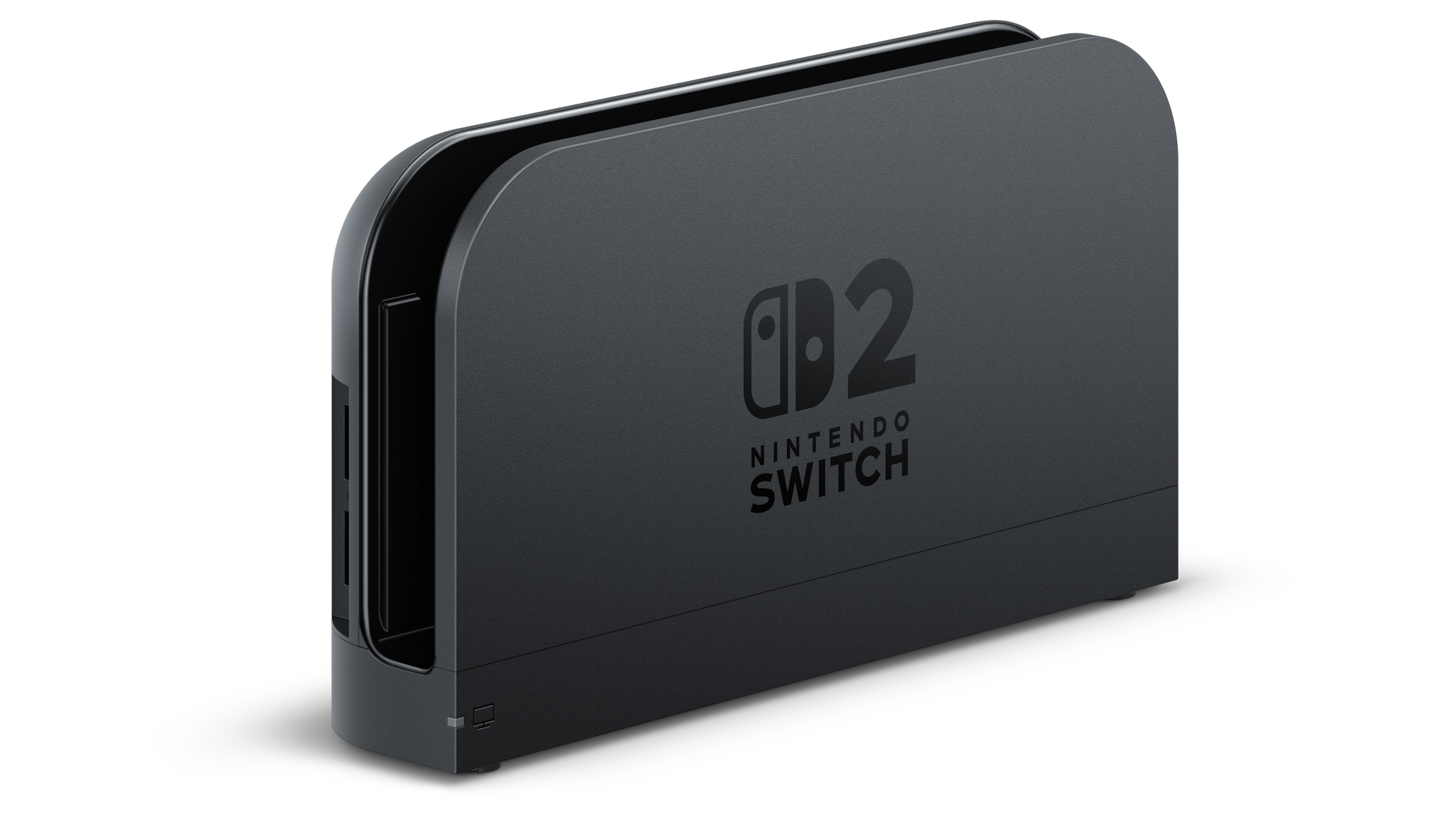
Nintendo Switch 2 dock — included in the box for 4K HDR TV output
Docking: the Switch 2 dock is included in the box and adds 4K output, HDR10, and a wired LAN port.
Round 07

Docking & TV Play

The Switch 2 is still a console first, and it shows here. Its dock comes in the box: drop the console in, and it outputs to your TV over HDMI at up to 4K 60 fps (or 120 fps at 1080p/1440p) with HDR10 support and variable refresh rate. The dock also adds a wired LAN port and two USB ports, so the whole setup is plug-and-play in about ten seconds.

The Steam Deck OLED can also drive a TV, over USB-C DisplayPort, but the official Docking Station is sold separately (it was listed at $79 on Valve's store at last check). Once docked, you can plug in a keyboard, mouse, or controller and use it like a small PC. It's more flexible, but costs more and needs more setup. Switch 2 wins this round for convenience and value.

Round 08

Software & Openness

This is where the Steam Deck OLED pulls away. SteamOS is a full Linux-based operating system with a console-style interface on top and a Desktop Mode underneath. You can install other game stores and apps, customize controls per game, tweak performance settings, and even install Windows if you want to. It treats you like an adult who owns the hardware.

Nintendo's system software is the opposite: fast, simple, polished, and closed. It's easy for kids and non-gamers, there's almost nothing to configure, and it just works — but you can't install other stores or apps, and customization is limited. Verdict: Steam Deck OLED for flexibility; Switch 2 for simplicity. If you've ever wanted to tinker, this round isn't close.

Round 09

Controls & Input

The Steam Deck OLED is packed with input hardware: two full-size analog sticks with capacitive touch, two haptic trackpads, a D-pad, ABXY buttons, analog triggers, four assignable back grip buttons, gyro, HD haptics, and a capacitive touchscreen. The trackpads are what let it play mouse-and-keyboard-style PC games without a mouse, and nothing else in the handheld market matches that range.

The Switch 2's Joy-Con 2 controllers are more compact but more versatile in a living room: they detach, work as two separate controllers, and each includes a mouse sensor plus gyro and HD rumble 2. That's brilliant for local multiplayer and some quirky Nintendo games. For solo play with depth and PC-style control, the Deck wins this round. For couch co-op, the Switch 2 does.

Round 10

Storage & Online

The Switch 2 ships with 256 GB of UFS storage, which fills up quickly with large modern games. It expands only with microSD Express cards (up to 2 TB) — older microSD cards can't be used for Switch 2 games, and the newer cards cost more. The Steam Deck OLED starts at 512 GB of NVMe storage (1 TB on the larger model) and also takes ordinary, inexpensive microSD cards.

Online play favors the Deck too: playing online on Steam doesn't require a subscription, while online play on Switch 2 requires a Nintendo Switch Online membership. Over a few years, that gap adds up. Round result: Steam Deck OLED, on storage and ongoing cost.

Round 11

Price & Value

This is the round where 2026 changed the story. The Switch 2 now costs $499.99 in the US, after Nintendo's $50 increase on September 1, 2026 — and that price includes the console, the dock, and two Joy-Con 2 controllers. The Steam Deck OLED now starts at $789 for the 512GB model and $949 for 1TB, after Valve's May 27 increase from $549 and $649, which Valve attributes to component costs. The Deck's dock is extra.

That makes the Switch 2 roughly $289 cheaper to start, with more in the box. Valve also lists certified refurbished OLED units when they're in stock — recently $629.99 for 512GB and $759 for 1TB — which narrows the gap, but stock comes and goes. Over several years, Steam's sales and free online play help the Deck, but the upfront gap is large. Switch 2 wins this round on entry price and what's included.

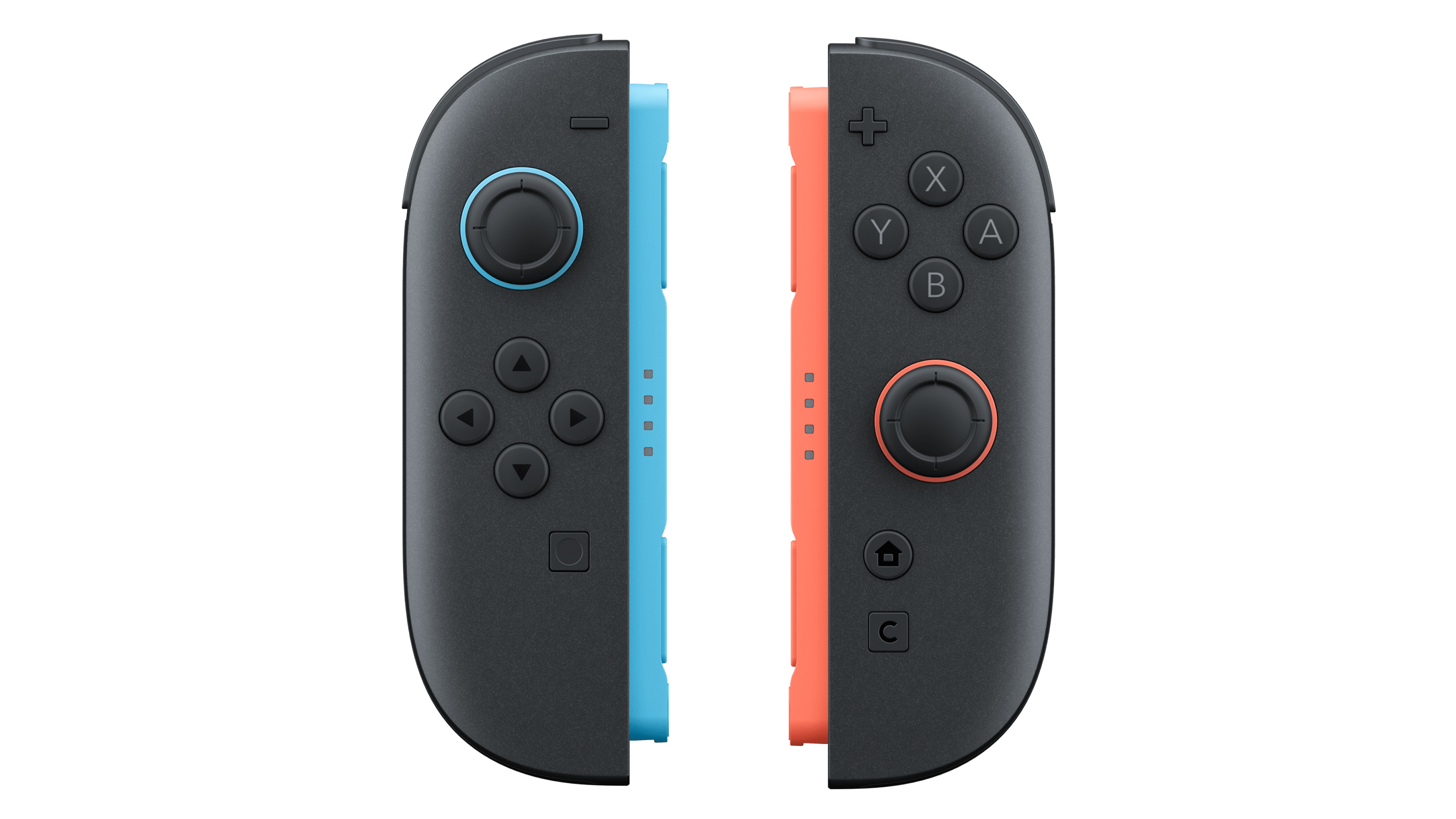
Nintendo Switch 2 Joy-Con 2 controllers — detachable controllers for couch co-op and everyday handheld play
Daily use: detachable Joy-Con 2 controllers make the Switch 2 an instant two-player console; the Deck is built for one.
Round 12 — Final

Real-World Daily Use

This is the round that matters most, and it doesn't have a winner. The Steam Deck OLED wins more categories in this comparison — battery, library, software, controls, and storage — but a scoreboard can't tell you what you want to play. If your must-have games are Nintendo games, none of the Deck's advantages matter. If your library lives on Steam, none of the Switch 2's do.

In practice, the Switch 2 is the device you hand to anyone: plug it in, pass a Joy-Con, and play. The Deck is the device you tinker with and sink hundreds of hours into. If you're a Nintendo fan, a parent, or you want a TV-first console that also goes portable — buy the Switch 2. If you're already a PC gamer, buy the Deck. Round result: It depends on you.

The final scoreboard

12 rounds of head-to-head comparison. Both handhelds won meaningful categories. Here's how they stacked up.

Nintendo
4
Round wins · 3 ties
  • 01 · Design✓ Win
  • 02 · DisplayTie
  • 03 · PerformanceTie
  • 04 · Game LibraryLoss
  • 05 · Exclusives✓ Win
  • 06 · BatteryLoss
  • 07 · Docking✓ Win
  • 08 · SoftwareLoss
  • 09 · ControlsLoss
  • 10 · StorageLoss
  • 11 · Price✓ Win
  • 12 · Daily UseTie
VS
Valve
★ Round Winner
5
Round wins · 3 ties
  • 01 · DesignLoss
  • 02 · DisplayTie
  • 03 · PerformanceTie
  • 04 · Game Library✓ Win
  • 05 · ExclusivesLoss
  • 06 · Battery✓ Win
  • 07 · DockingLoss
  • 08 · Software✓ Win
  • 09 · Controls✓ Win
  • 10 · Storage✓ Win
  • 11 · PriceLoss
  • 12 · Daily UseTie

The final verdict: Steam Deck OLED wins on paper, Switch 2 wins for most players

The Steam Deck OLED wins the spec-sheet showdown 5-4 with 3 ties. It has the longer battery, the open software, the deeper controls, more storage, free online play, and the biggest game library. If you already own games on Steam and want the most capable handheld, the Steam Deck OLED from $789 is the better device — if you can stomach the new price.

But here's the honest truth most comparisons won't give you: "more capable" doesn't mean "better for you". The Switch 2 costs about $289 less to start, includes its dock and two controllers, and is the only way to play Nintendo's biggest games. If you want Mario Kart World, couch co-op, or a console the whole family can pick up, the Switch 2 at $499.99 is the easier decision.

The right handheld for you depends on which games you already love. Read more comparisons on our comparison tool or browse other devices on our Electronics category page.

Frequently asked questions

The questions our readers ask most often when choosing between Nintendo and Valve handhelds.

Should I buy the Switch 2 or the Steam Deck OLED in 2026?

Start with the games you want to play. If your must-play list is Nintendo games — Mario Kart World, Donkey Kong Bananza, and the rest of Nintendo's first-party lineup — the Switch 2 is the only option, and at $499.99 it also includes the dock and two controllers. If you already own Steam games, or mostly play indies and PC titles, the Steam Deck OLED is the better fit.

If you're torn, price tips it toward the Switch 2 for most casual players, and capability tips it toward the Steam Deck OLED for dedicated PC gamers.

Can the Switch 2 play my old Nintendo Switch games?

Yes, for most of them. Both Nintendo Switch 2 and Nintendo Switch game cards fit the Switch 2's card slot, and it plays compatible physical and digital Switch games. A few titles have limitations, so check Nintendo's official game compatibility list before assuming a specific game works.

Nintendo also has a guide for moving your data and library over. See Nintendo's Switch 2 support page for setup help.

Is the Steam Deck OLED worth $789 now?

It's a much harder sell than it was at $549. Valve raised the 512GB model to $789 and the 1TB model to $949 on May 27, 2026, citing component costs, and the Deck has been a 2023 design since launch. It remains an excellent handheld — the OLED screen, battery, and open software are still best-in-class — but the price now overlaps with much more expensive territory.

If the price is too high, check Valve's certified refurbished Steam Deck page — OLED units have been listed there for less when in stock, and they come with a warranty.

Which has better battery life — Switch 2 or Steam Deck OLED?

The Steam Deck OLED. Valve rates its 50Whr battery at 3–12 hours of gameplay depending on the game, while Nintendo rates the Switch 2's 5,220 mAh battery at roughly 2–6.5 hours. Both are estimates, and demanding games drain either device faster, but the Deck has the higher ceiling and the larger battery.

For people who play on long flights, commutes, or road trips, a USB-C power bank helps on either device. The Deck ships with a 45W charger, and the Switch 2 takes about 3 hours to charge from empty in sleep mode.

Should I wait for a Steam Deck 2 or a cheaper Switch 2?

Valve has said a Steam Deck successor is in the works, but hasn't announced a price or release date, and component costs are keeping hardware prices high across the industry. Nintendo just raised Switch 2 prices rather than lowering them, so a price cut soon looks unlikely.

Honest take: buy when you have games you want to play. Waiting for a hypothetical new model or sale can mean months without a handheld. Keep an eye on our deals page for current offers.

Get our weekly buying guides

Honest comparison reviews like this one, plus the best deals on the products we test. No spam, ever — unsubscribe in one click.